
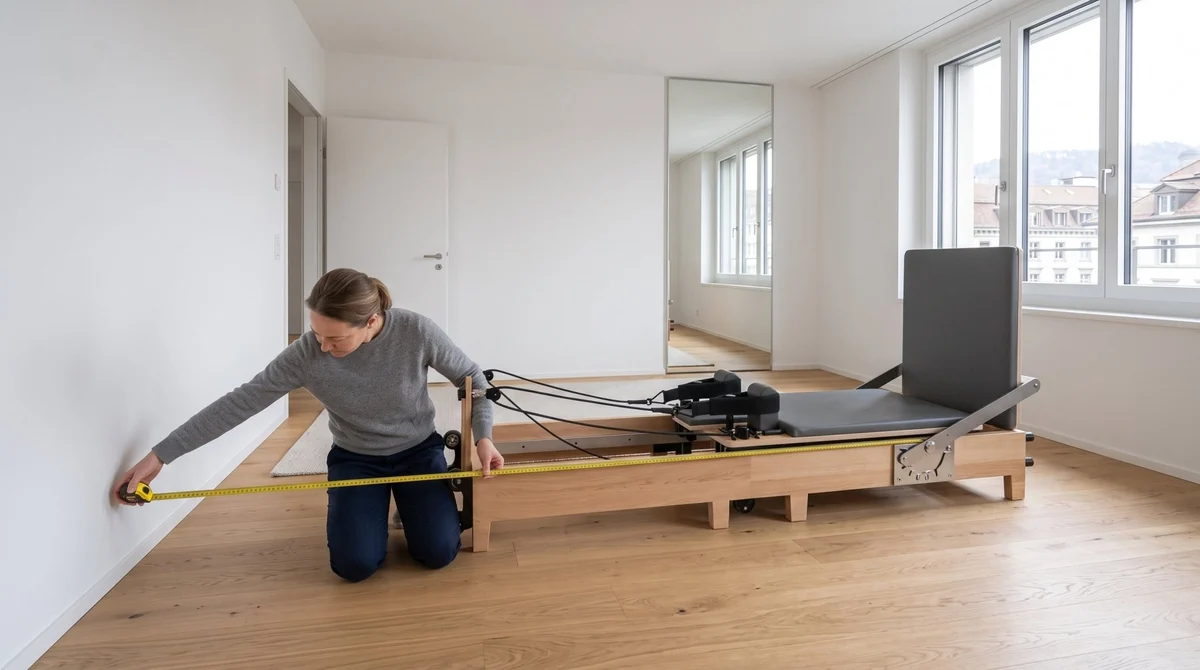
Living in a small flat does not mean they have to give up on reformer-style training at home. The key is knowing exactly how much floor space a machine needs, how that space changes during use, and what clearance makes it feel safe instead of cramped.
This guide breaks down pilates machine footprints measured for small flats in a practical way, so they can choose a setup that fits their room, their body, and their day-to-day routine.
What does “footprint” really mean for a Pilates machine?
A footprint is the rectangle of floor space the machine occupies when it is sitting still. For pilates machine footprints measured for small flats, that also needs to include the space they need to get on and off, adjust springs, and move safely around it.
In other words, the useful footprint is usually larger than the machine’s base size.
How much floor space do most reformers need in a small flat?
Most full-length reformers land around 2.3 to 2.5 m long and about 0.6 to 0.75 m wide. In a tight home setup, pilates machine footprints measured for small flats often work best when they plan for a “working zone” closer to 2.8 m by 1.5 m.
That extra clearance helps with side access, carriage travel visibility, and avoiding wall knocks.
How much clearance should they add around the machine?
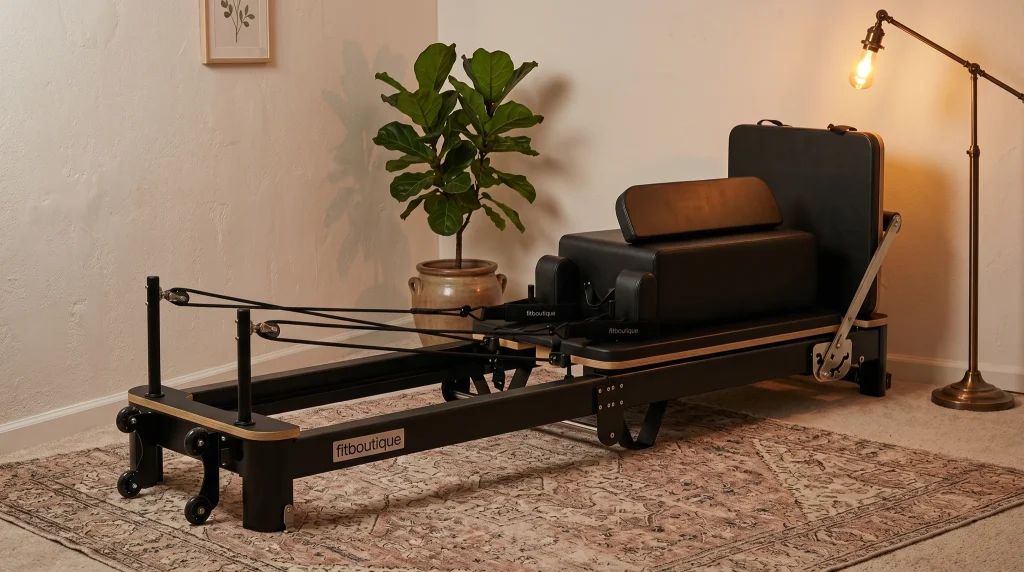
A simple rule is to add at least 30 to 45 cm on both long sides if they want comfortable access. For pilates machine footprints measured for small flats, adding 60 cm at one side is even better if they expect frequent spring changes or shared use.
At the head and foot ends, they should aim for 45 to 60 cm so straps, loops, and their feet do not hit a wall.
What changes when they actually use the reformer?
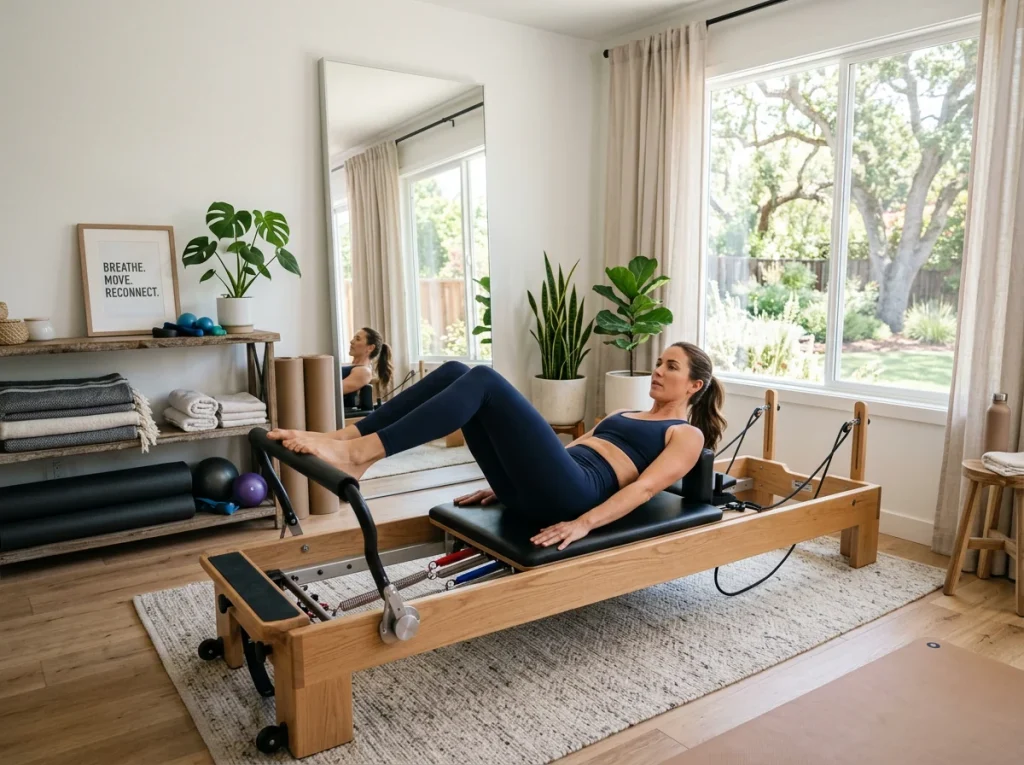
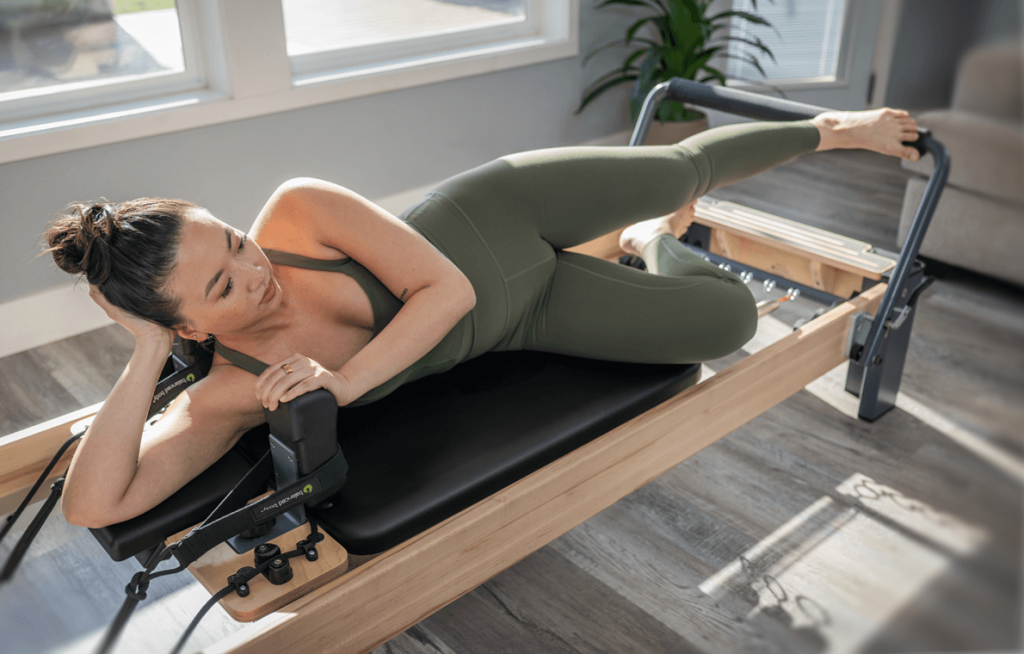
During use, their body extends beyond the frame in exercises like long stretch, elephant, and feet-in-straps. That is why pilates machine footprints measured for small apartments should consider “movement clearance,” not only the frame dimensions.
If the room is narrow, they can still manage by aligning the reformer lengthwise along the longest wall and keeping one side more open.
Which machine types fit best in small apartments?
Folding reformers, compact studio reformers, and reformers with removable legs usually suit small spaces best. When comparing pilates machine footprints measured for small apartments, they should also look at storage size, not just in-use size.
A machine that stores upright or under a bed can make a small room feel usable again after training.
How do folding reformers affect footprint and storage planning?
Folding reformers often keep similar in-use length but reduce storage footprint significantly. For pilates machine footprints measured for small apartments, they should check whether the folded unit stands securely, whether wheels roll on their flooring, and whether the folded height clears shelves.
They also need to confirm if folding adds any wobble or extra set-up time that they will realistically tolerate.
How much space do they need for a Pilates chair or tower instead?
A Pilates chair can take far less floor space, often roughly 0.6 m by 0.6 m, but it needs room to step around it safely. For pilates machine footprints measured for small apartments, a chair may be a smarter option if they cannot spare a 2.5 m run of open floor.
A wall-mounted or compact tower setup can also work, but they must measure wall clearance and ceiling height.
What room layouts work best for tight footprints?
The easiest layout is placing the reformer parallel to a long wall, leaving one side as the main access lane. Pilates machine footprints measured for small apartments usually succeed when they avoid centring the machine in the room, which wastes clearance on both sides.
If they live in a studio, placing it near the bed edge or behind a sofa line can work if they keep walk paths clear.
How can they measure their apartment quickly and accurately?
They can map the floor using masking tape in the exact length and width of the machine, then add clearance tape lines. For pilates machine footprints measured for small apartments, that taped outline reveals issues instantly, like door swings, wardrobe access, and tight corners.
They should also measure lift access, stair turns, and entry widths before buying.
What should they consider about flooring, neighbours, and noise?
Apartments add constraints that studios do not. pilates machine footprints measured for small apartments should include a plan for a dense mat under the machine to reduce vibration and protect floors.
They may also prefer machines with quieter wheels and smoother carriage travel, especially if they train early or live above others.
How do they choose a model without overbuying space they cannot use?
They should prioritise smooth carriage travel, stable frame feel, and adjustable resistance over extra accessories that increase storage clutter. Pilates machine footprints measured for small apartments are easiest to manage when they pick a model that matches their actual practice, not an aspirational one.
If they mainly do fundamentals and mobility, a compact or folding model may be enough.
What is a realistic budget for apartment-friendly machines?
Prices vary widely, but apartment-friendly options often sit between £800 and £3,000, depending on build quality and features. For pilates machine footprints measured for small apartments, it can be smarter to spend slightly more on a stable, quiet machine than to save money and end up with something noisy or shaky.
They should also budget for delivery, assembly, and a protective mat.
What are common footprint mistakes people make in small apartments?
The most common mistake is measuring only the machine base and ignoring clearance. Pilates machine footprints measured for small apartments often go wrong when they forget about doors, drawers, or balconies that need to open.
Another mistake is buying a long reformer without checking whether the room allows safe dismounting at the ends.
How can they make a small training space feel bigger?
They can keep one “open lane” beside the machine and store accessories vertically in a slim tub or wall organiser. Pilates machine footprints measured for small apartments feel less intrusive when the area is treated like a dedicated zone, not a pile of gear.
A mirror on a wall, good lighting, and a rolled mat system can also help the space feel intentional.
What quick checklist helps them confirm the footprint will work?
They can confirm fit by checking four things: in-use rectangle, clearance on at least one long side, door and cupboard movement, and storage plan. Pilates machine footprints measured for small apartments become straightforward when they treat it like any other furniture decision, with tape on the floor and real walking tests.
If they can move around the taped area without awkward squeezes, it is likely a workable choice.
FAQs (Frequently Asked Questions)
What does ‘footprint’ mean for a Pilates machine in a small flat?
The footprint refers to the rectangle of floor space the Pilates machine occupies when stationary, including additional space needed for getting on and off, adjusting springs, and moving safely around it. This useful footprint is usually larger than the machine’s base size.
How much floor space should I allocate for a reformer in a small flat?
Most full-length reformers are about 2.3 to 2.5 metres long and 0.6 to 0.75 metres wide. For a comfortable setup in a small flat, plan for a working zone of approximately 2.8 metres by 1.5 metres to allow side access, carriage travel visibility, and avoid wall knocks.
What clearance is recommended around a Pilates reformer for safe and comfortable use?
It’s advisable to add at least 30 to 45 centimetres on both long sides for comfortable access. For frequent spring changes or shared use, adding 60 centimetres on one side is better. At the head and foot ends, aim for 45 to 60 centimetres clearance to prevent straps, loops, or feet from hitting walls.
Which types of Pilates machines are best suited for small apartments?
Folding reformers, compact studio reformers, and reformers with removable legs are ideal for small spaces. When choosing, consider not only the in-use size but also storage size; machines that store upright or under a bed help keep the room usable after training.
How can I effectively measure my apartment space before purchasing a Pilates machine?
Use masking tape to map out the exact length and width of the machine on your floor, then add clearance tape lines around it. This visual outline helps identify potential issues like door swings or tight corners. Also measure lift access, stair turns, and entry widths prior to buying.
What should I consider about flooring and noise when setting up a Pilates machine in an apartment?
Apartments require planning for vibration reduction and floor protection by using dense mats under the machine. Opt for machines with quieter wheels and smoother carriage travel to minimise noise disturbances, especially if training early or living above neighbours.
Other Resources: When Personalised Lapel Pins Make Sense for Promotions